How Companies Reduce Bulk Shipment Costs in Modern Global Logistics
From freight consolidation and route optimization to flexitank technology and container utilization strategies, modern companies are constantly searching for ways to reduce transportation costs without sacrificing operational reliability. In today’s volatile shipping environment, cost efficiency has become one of the defining competitive advantages in global trade.
The Rising Pressure on Global Shipping Costs
International logistics has changed dramatically over the last two decades. What was once a relatively predictable cost center has evolved into one of the most volatile operational variables for manufacturers, commodity traders, food producers, chemical companies, and industrial exporters. Freight rates fluctuate rapidly. Fuel prices rise unexpectedly. Port congestion creates delays. Labor shortages disrupt schedules. Geopolitical tensions affect trade routes. Currency volatility impacts procurement planning. Environmental regulations increase compliance costs.
In response, companies around the world have become increasingly sophisticated in how they manage shipping operations. Transportation is no longer treated merely as a supporting function. It is now viewed as a strategic financial lever capable of influencing profitability, customer pricing, inventory efficiency, cash flow, and even long-term competitiveness.
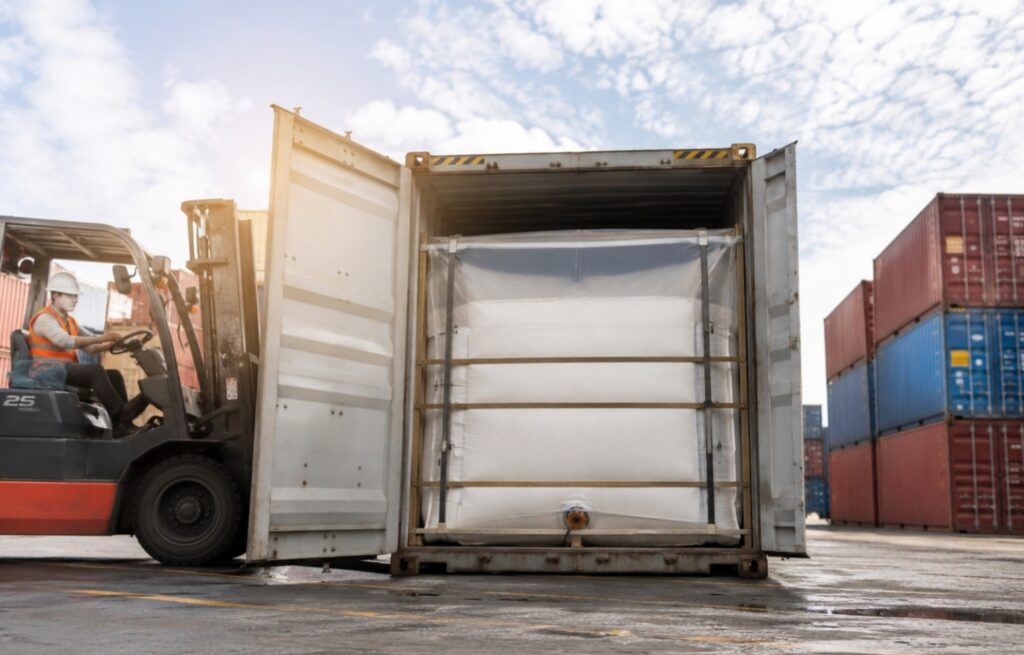
The difference between an efficient logistics strategy and an inefficient one can determine whether a business expands successfully into new markets or struggles under escalating operational expenses. For bulk liquid exporters especially, shipment optimization can mean saving hundreds of thousands — or even millions — of dollars annually.
Why Bulk Shipment Optimization Matters
In many industries, logistics cost is no longer a secondary operational issue. It directly influences pricing competitiveness, export viability, inventory planning, customer satisfaction, and profit margins. Companies that fail to optimize transportation costs often lose ground to more operationally disciplined competitors.
The Economics Behind Bulk Shipping
Bulk shipment economics revolves around one fundamental principle: maximizing payload while minimizing wasted space, handling time, and operational inefficiencies. Every cubic meter inside a shipping container has monetary value. Every additional loading or unloading step introduces labor costs, risk exposure, and time delays. Every unused portion of a container effectively represents wasted capital.
Historically, companies transporting non-hazardous liquid cargo often relied on drums or intermediate bulk containers (IBCs). While functional, these methods introduced several inefficiencies:
- Lower payload utilization per container
- Higher packaging costs
- Increased labor requirements
- Greater warehouse space consumption
- Higher disposal or cleaning expenses
- More complex loading and unloading operations
- Increased contamination risks
As international trade volumes increased, businesses began searching for alternatives capable of improving transportation efficiency while reducing operational complexity. This search led to the broader adoption of advanced bulk transport systems such as flexitanks.
Flexitanks and the Transformation of Bulk Liquid Logistics
One of the most important innovations in modern liquid transportation has been the rise of flexitank technology. A flexitank is a large, flexible, multi-layered liquid containment system installed inside a standard 20-foot shipping container. Instead of shipping liquids in multiple drums or smaller containers, companies can transport bulk liquid cargo directly inside the container through a single high-capacity liner system.
This innovation fundamentally changes the economics of liquid transportation. Rather than allocating valuable container space to rigid packaging materials, businesses can maximize liquid payload volume inside the same container footprint.
| Traditional Drums / IBCs | Flexitank System |
|---|---|
| Lower payload utilization | Higher payload capacity |
| High packaging costs | Reduced packaging requirements |
| More labor intensive | Simplified loading operations |
| Higher warehouse footprint | Improved storage efficiency |
| Complex disposal management | Streamlined logistics process |
For many non-hazardous liquid cargoes such as edible oils, lubricants, industrial liquids, liquid fertilizers, chemicals, and food-grade products, flexitanks offer substantial transportation savings compared to traditional packaging methods. For additional details, consult this flexitank guide.
How Flexitanks Reduce Overall Shipment Costs
1. Higher Payload Efficiency
One of the biggest financial advantages of flexitanks is payload optimization. A standard 20-foot container equipped with a flexitank can often carry significantly more liquid cargo compared to drums or IBC configurations.
When payload increases, transportation cost per liter decreases. This becomes especially important for high-volume exporters shipping regularly across international markets. Even small efficiency gains per shipment accumulate into major annual savings.
2. Reduced Packaging Expenses
Traditional shipping methods often require hundreds of drums or multiple IBCs for a single shipment. These packaging materials are expensive to purchase, handle, store, and dispose of. Flexitanks significantly reduce dependence on rigid packaging infrastructure.
This reduction in packaging cost affects multiple operational layers simultaneously:
- Lower procurement costs
- Reduced packaging inventory management
- Less warehouse congestion
- Lower return logistics expenses
- Reduced cleaning and maintenance requirements
3. Lower Labor Requirements
Handling hundreds of drums is labor intensive. Workers must load, position, secure, inspect, and unload individual units. Flexitanks simplify much of this process through centralized loading and discharge operations.
Reduced labor dependency translates into:
- Lower manpower costs
- Reduced forklift operations
- Faster turnaround times
- Lower injury risk
- Improved operational efficiency
4. Better Container Utilization
Shipping companies and exporters constantly evaluate how effectively they utilize container space. Empty air inside a container generates no revenue but still incurs freight charges.
Flexitanks are specifically designed to maximize the usable interior space of standard containers. Better utilization means more product moved with fewer shipments.
The Hidden Costs Companies Try to Eliminate
Many businesses focus only on visible freight charges while overlooking indirect logistics expenses. However, experienced logistics managers understand that hidden costs often create the largest long-term financial burden.
These hidden costs include:
| Hidden Cost Area | Operational Impact |
|---|---|
| Warehouse congestion | Reduced storage efficiency and higher rental costs |
| Excessive handling | Increased labor and damage risks |
| Inventory delays | Cash flow inefficiencies |
| Packaging disposal | Environmental and operational expenses |
| Product contamination | Claims, losses, and reputational damage |
Logistics optimization is therefore not merely about reducing freight invoices. It involves redesigning the entire supply chain to eliminate inefficiencies across transportation, handling, warehousing, packaging, and inventory movement.
Beyond Flexitanks: Other Major Cost Reduction Strategies
Route Optimization
Companies increasingly use advanced logistics software to identify the most cost-efficient transportation routes. Even small routing improvements can reduce fuel costs, delivery times, and detention charges.
Freight Consolidation
Rather than shipping partially filled containers, companies consolidate multiple shipments into optimized loads. This reduces overall transportation frequency while maximizing freight efficiency.
Supplier Proximity Planning
Some manufacturers reduce logistics costs by strategically sourcing materials closer to production facilities or ports. Reduced inland transportation often generates significant long-term savings.
Inventory Synchronization
Poor inventory coordination frequently causes emergency shipments, partial loads, and unnecessary storage expenses. Advanced forecasting systems help companies synchronize supply chain timing more efficiently.
Digital Supply Chain Visibility
Modern ERP systems and logistics platforms provide real-time shipment tracking, predictive analytics, and operational visibility. Better information leads to faster decision-making and reduced operational waste.
The Psychology of Cost Reduction in Modern Business
Cost reduction is often misunderstood as simple expense cutting. In reality, the most successful companies approach logistics optimization as a strategic discipline rather than a defensive reaction.
Poorly managed cost-cutting frequently damages operations. Companies that aggressively reduce spending without understanding operational consequences often experience:
- Lower service quality
- Increased shipment delays
- Higher damage rates
- Supply chain instability
- Customer dissatisfaction
- Long-term inefficiencies
The most effective logistics strategies are not about reducing spending at all costs. They are about improving operational intelligence. Businesses that win in global trade are usually the ones capable of moving larger volumes with greater consistency, fewer disruptions, and better utilization of assets.
Why Flexitanks Became Popular in Southeast Asia
Southeast Asia has become one of the fastest-growing regions for bulk liquid transportation. The region exports significant volumes of edible oils, industrial chemicals, lubricants, agricultural products, and food-grade liquids.
Flexitanks gained strong adoption in the region because they align well with several operational realities:
- High export-oriented manufacturing activity
- Strong port infrastructure development
- Growing intra-Asia trade
- Demand for lower shipping costs
- Increased containerized cargo movement
- Need for scalable liquid transport solutions
Exporters shipping from Malaysia, Indonesia, Thailand, Vietnam, and neighboring markets increasingly use flexitanks as part of broader supply chain optimization strategies.
Risk Management and Shipment Efficiency
Cost reduction strategies only work when risk management remains strong. A shipment method that appears cheaper upfront may become extremely expensive if contamination, leakage, delays, or cargo damage occur.
This is why reputable logistics providers place strong emphasis on:
- Quality assurance procedures
- Container inspection protocols
- Loading supervision
- Cargo compatibility assessments
- Operational training
- Route risk evaluation
- Documentation accuracy
Reliable bulk transportation requires both efficiency and discipline. Cutting corners in logistics frequently produces expensive downstream consequences.
The Future of Bulk Shipment Cost Reduction
The future of logistics optimization will likely involve even deeper integration between physical transportation systems and digital intelligence platforms.
Companies are increasingly exploring:
- AI-driven route optimization
- Predictive freight analytics
- Automated warehouse coordination
- Smart container monitoring
- IoT shipment visibility systems
- Advanced cargo tracking technologies
- Carbon-efficient transportation planning
At the same time, physical innovations such as flexitanks continue to play a major role because operational efficiency ultimately depends on how intelligently cargo is physically transported.
The companies that thrive in global logistics will not necessarily be the largest. They will often be the ones that understand efficiency at the deepest operational level.
Operational Efficiency Is Now a Competitive Weapon
Modern logistics is no longer just about moving cargo from one place to another. It is about maximizing efficiency across every stage of transportation, storage, handling, packaging, and inventory movement.
Flexitanks represent one example of how operational innovation can dramatically improve bulk shipment economics. By increasing payload efficiency, reducing packaging costs, simplifying handling processes, and optimizing container utilization, companies can significantly reduce overall transportation expenses while improving supply chain performance.
In an increasingly competitive global market, businesses that master logistics efficiency gain advantages that extend far beyond freight savings. They improve scalability, strengthen resilience, increase pricing flexibility, and create stronger long-term operational foundations.